Opportunities in the Conservation Economy
Nature and adventure tourism
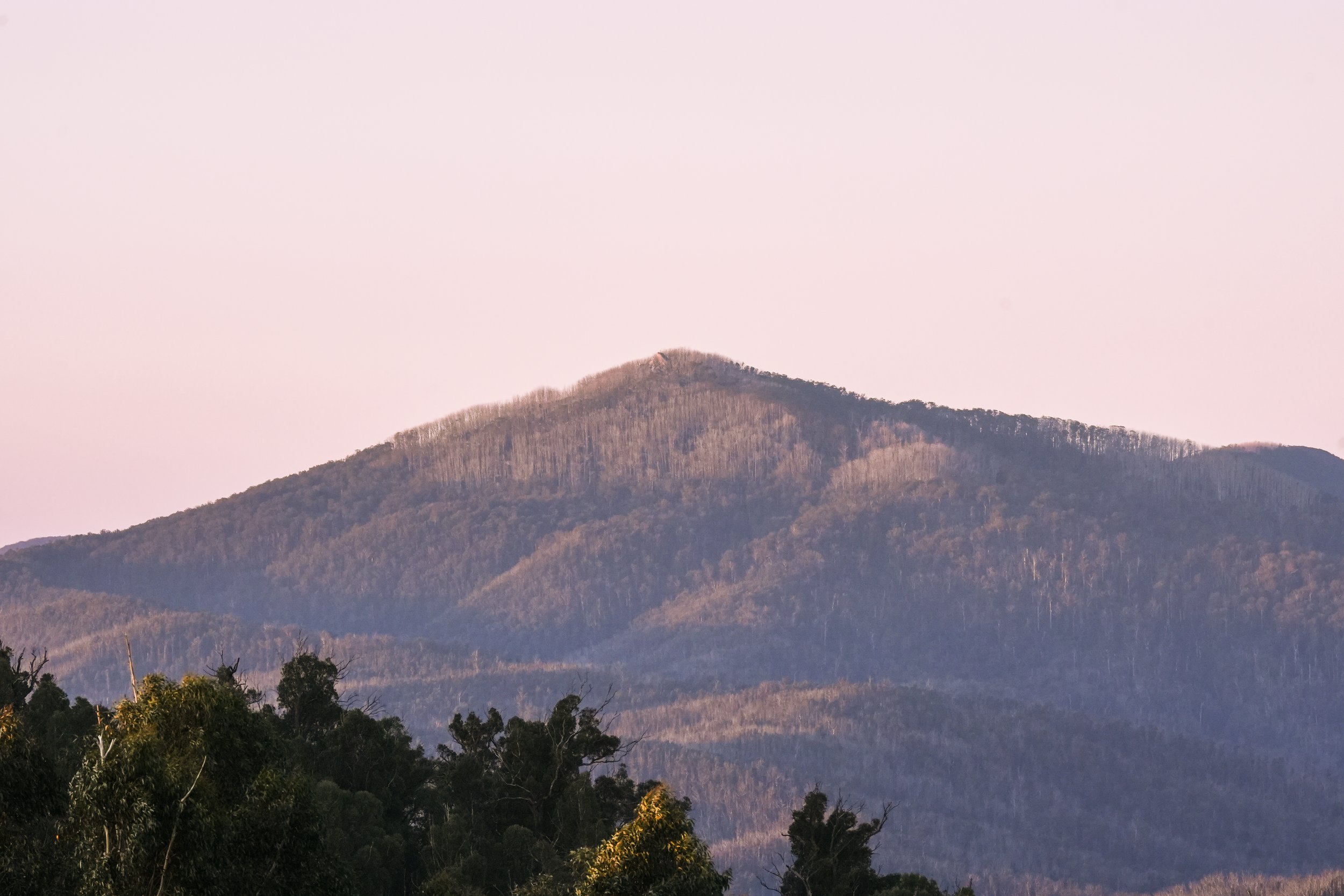
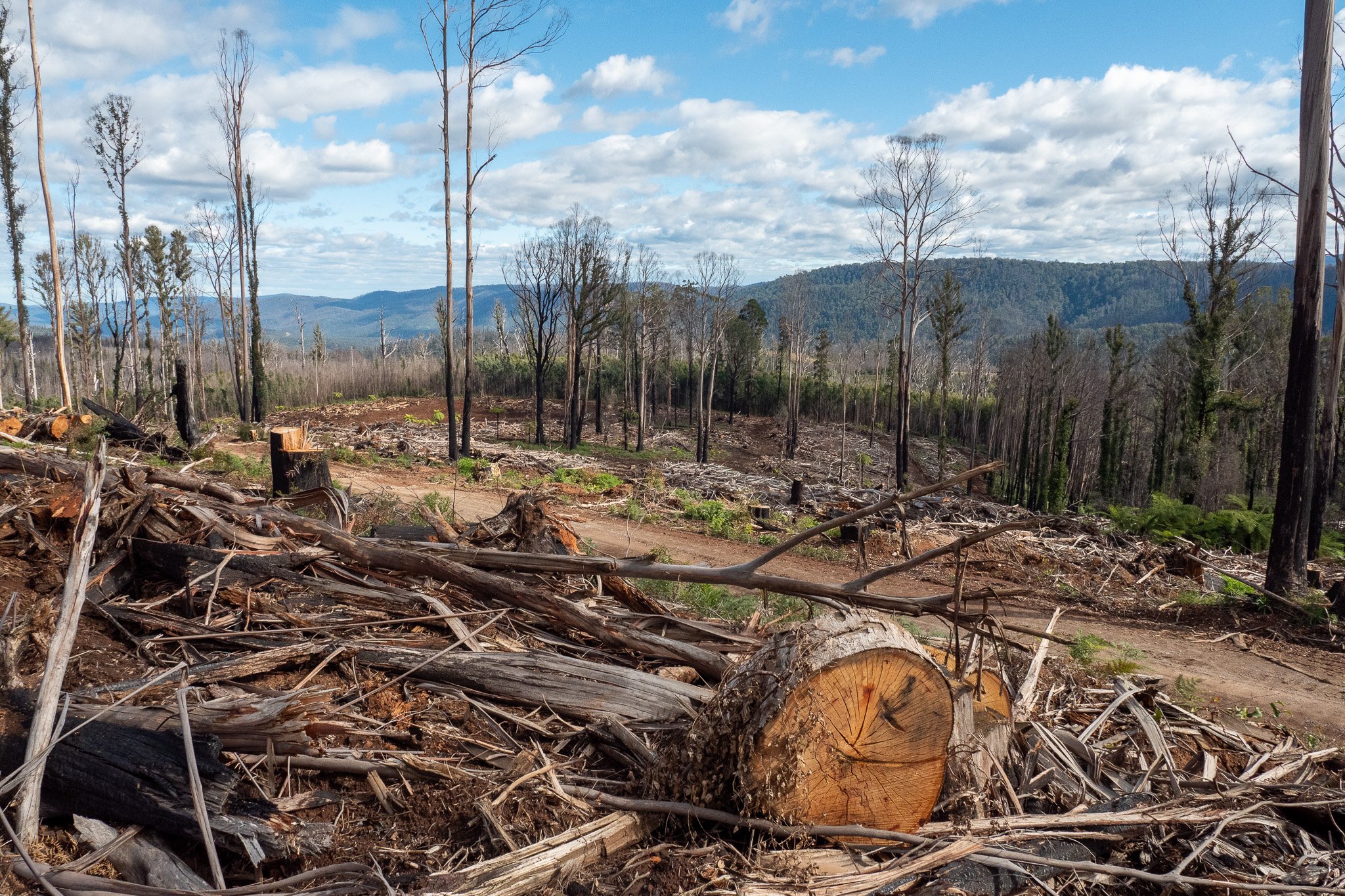
The devastating 2019-2020 Summer bushfires ravaged through approximately 80% of the forests of East Gippsland, a region known for its unique biodiversity and continuous forest from alpine to coastal environments. It will take many years for the precious areas of tall wet forests and cool and temperate rainforests affected to fully recover.
For many in the community, which has grown up loving and enjoying these forests, climate change and the impacts of decades of industrial clearfell logging played a big part in this devastating event. Luckily for all, many important refuges like the Errinundra Plateau or the Nunniong Plateau escaped the flames and remain an invaluable treasure that needs to be protected from future threats.
Since the end of clearfell logging in 2024, a huge task lies ahead in order to preserve and restore these precious ecosystems, which will require a big investment by the government. One effective strategy to multiply the impact of public investment is by promoting The Emerald Link as a nature-based tourism destination. By attracting visitors into the area, we will not only be able to generate local jobs with good environmental outcomes, but also promote the importance of preserving the last unbroken link of forests from the Alpine region to the coast.
Jobs in the Conservation Economy
East Gippsland is a region with heart. A place where forested mountains meet wild coastlines, and where people have always worked closely with the land. The community is ready for the next chapter: one where local jobs strengthen the health of Country, and build a thriving economy grounded in restoration, care and long-term stewardship.
We’re calling this the Conservation Economy. And it’s already taking shape.
With over 80 percent of East Gippsland made up of public forests, there’s huge potential to invest in a regional workforce that not only looks after the environment but strengthens our communities at the same time. From rainforest gullies to alpine peaks, we have hundreds of thousands of hectares in need of care.
So, what kinds of jobs are we talking about?
The list is long and growing:
• Forest Restoration: Healing areas damaged by past land use, replanting native species, and restoring ecosystems to health
• Fire Resilience and Road Access: Bringing together First Nations cultural fire knowledge with the latest ecological fire science to build healthier, more resilient forests. Upgrading and maintaining key access roads for fire safety, forest care and tourism
• Cultural Land Management: Supporting Traditional Owner led programs that restore cultural knowledge and practices on Country
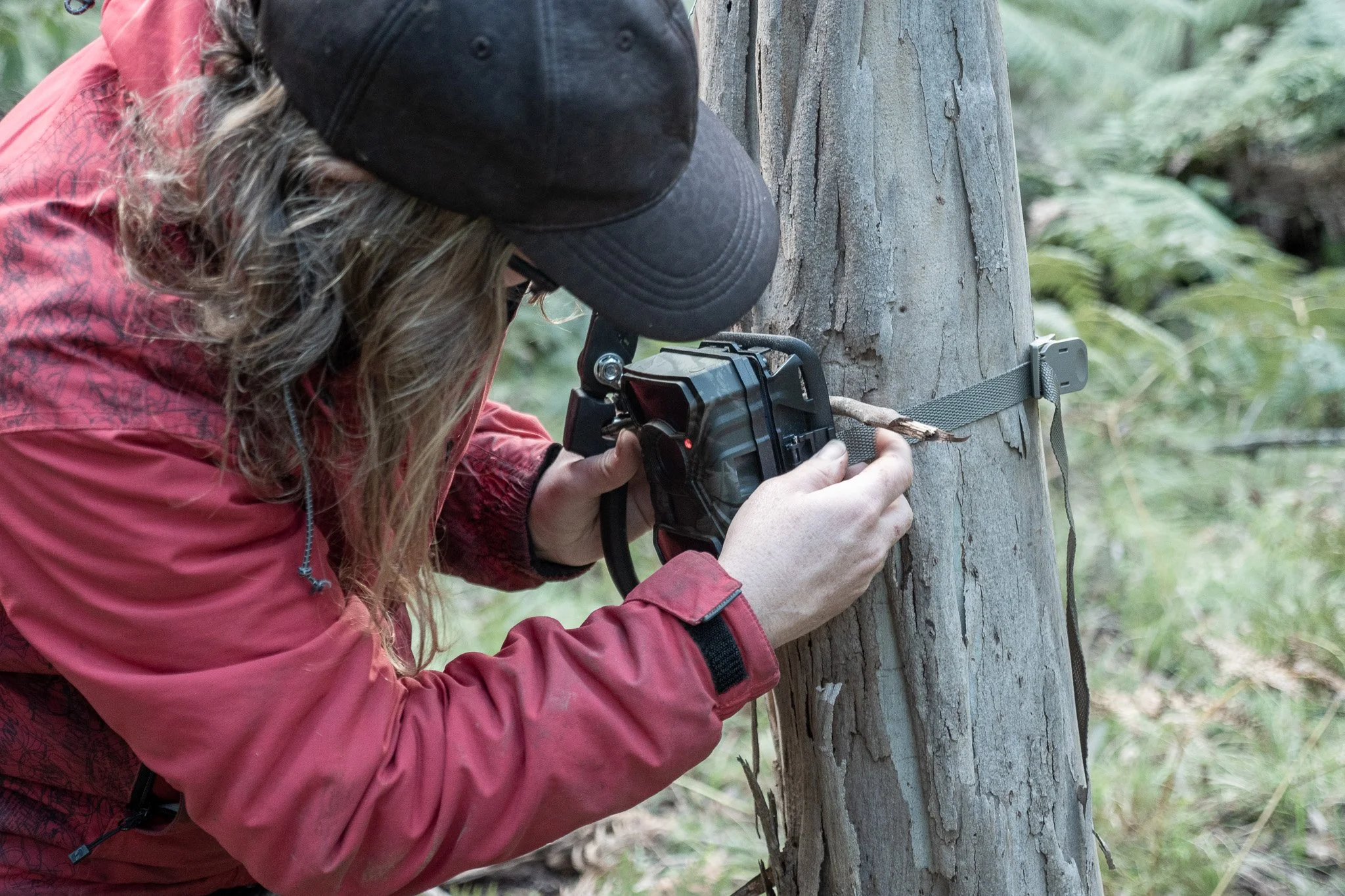
• Pest and Weed Management: Tackling deer, cats, foxes and invasive weeds that threaten our native species and ecosystems
• Threatened Species Recovery: Implementing action plans to help native wildlife survive and thrive
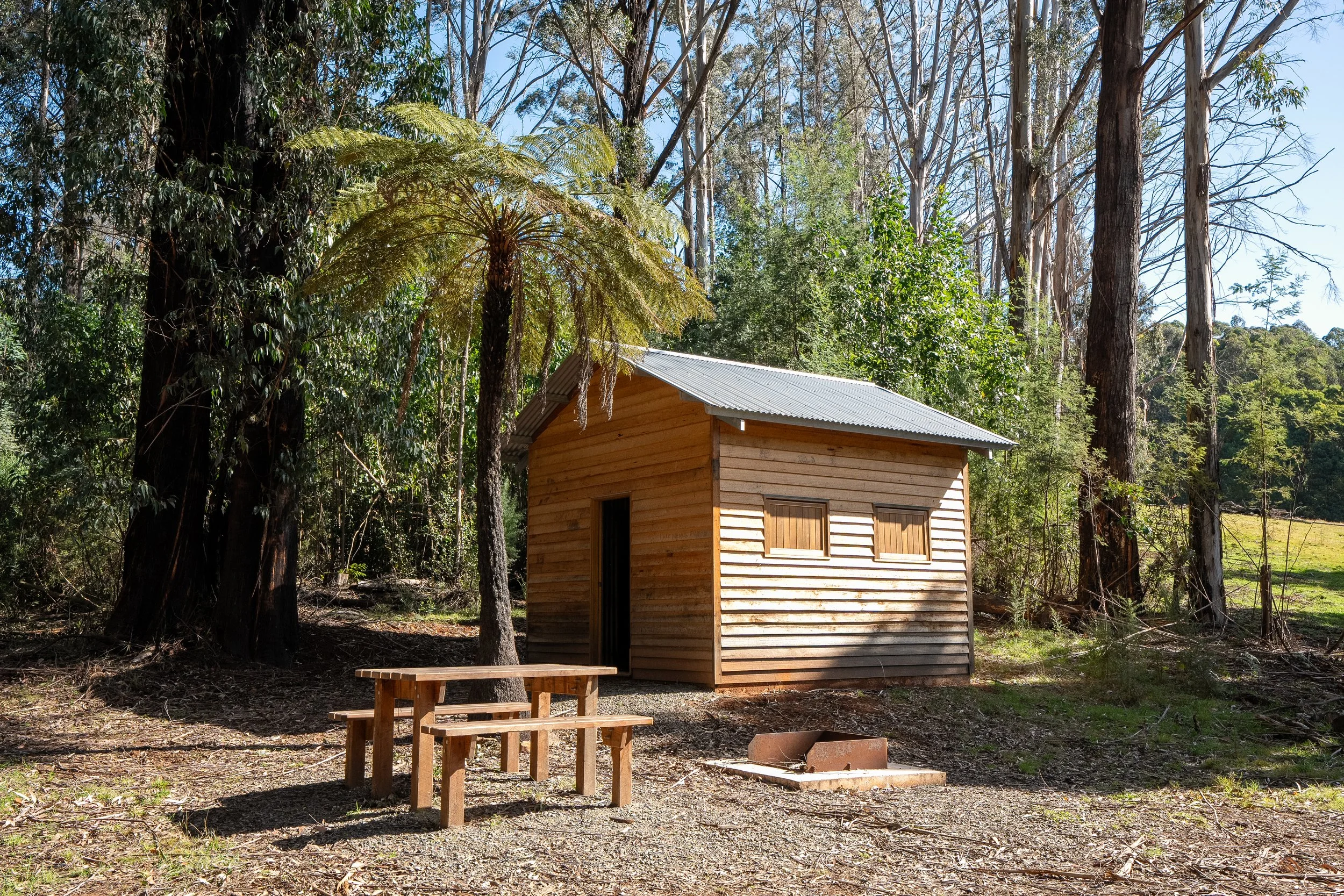
• Visitor Infrastructure: Maintaining and improving trails, signage and picnic and camping areas to support nature based tourism and local businesses
This isn’t just about the environment—it’s about people. Conservation jobs are real, meaningful, and can provide long term employment for locals of all ages and backgrounds.
Let’s build a future where our forests are healthy, our communities are strong, and the next generation can see a career in caring for Country.
An Emerald Link proposal that became a government initiative: The Sea to Summit trail
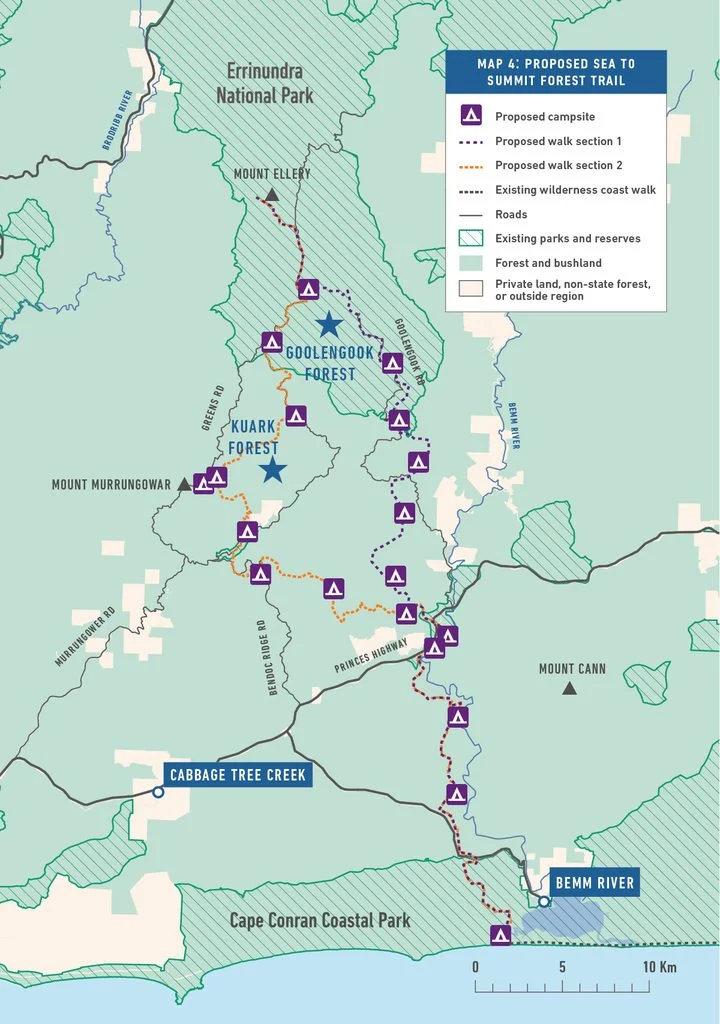
In collaboration with local communities, we envisioned an iconic hiking trail—the Sea to Summit. In 2018, we celebrated the State Government’s endorsement of this vision, including a $1.5 million investment toward its planning. Market research findings, released by Minister D’Ambrosio in February 2022, confirmed strong support from stakeholders and the local community, underscoring the trail’s potential to attract more visitors to East Gippsland.
The Sea to Summit Trail represents a major opportunity to unlock the economic benefits of nature-based recreation and the conservation economy in our region. The market analysis provided valuable insights into the walker and nature-based recreation sector in Victoria’s far east, offering renewed hope for communities recovering from the 2019–20 bushfires and the challenges of COVID-19.
A government-commissioned feasibility study went on to identify a critical next step: future investment should be directed to the higher-altitude country north of Mount Ellery, where unburnt and intact forests offer the strongest potential for a multi-day visitor experience. The study found that most forested areas south of Mount Ellery were too fire-affected or degraded to deliver a high-quality, iconic trail product, while the northern mountainous landscape provides the natural values, trail potential and visitor appeal needed for the project to succeed.
-
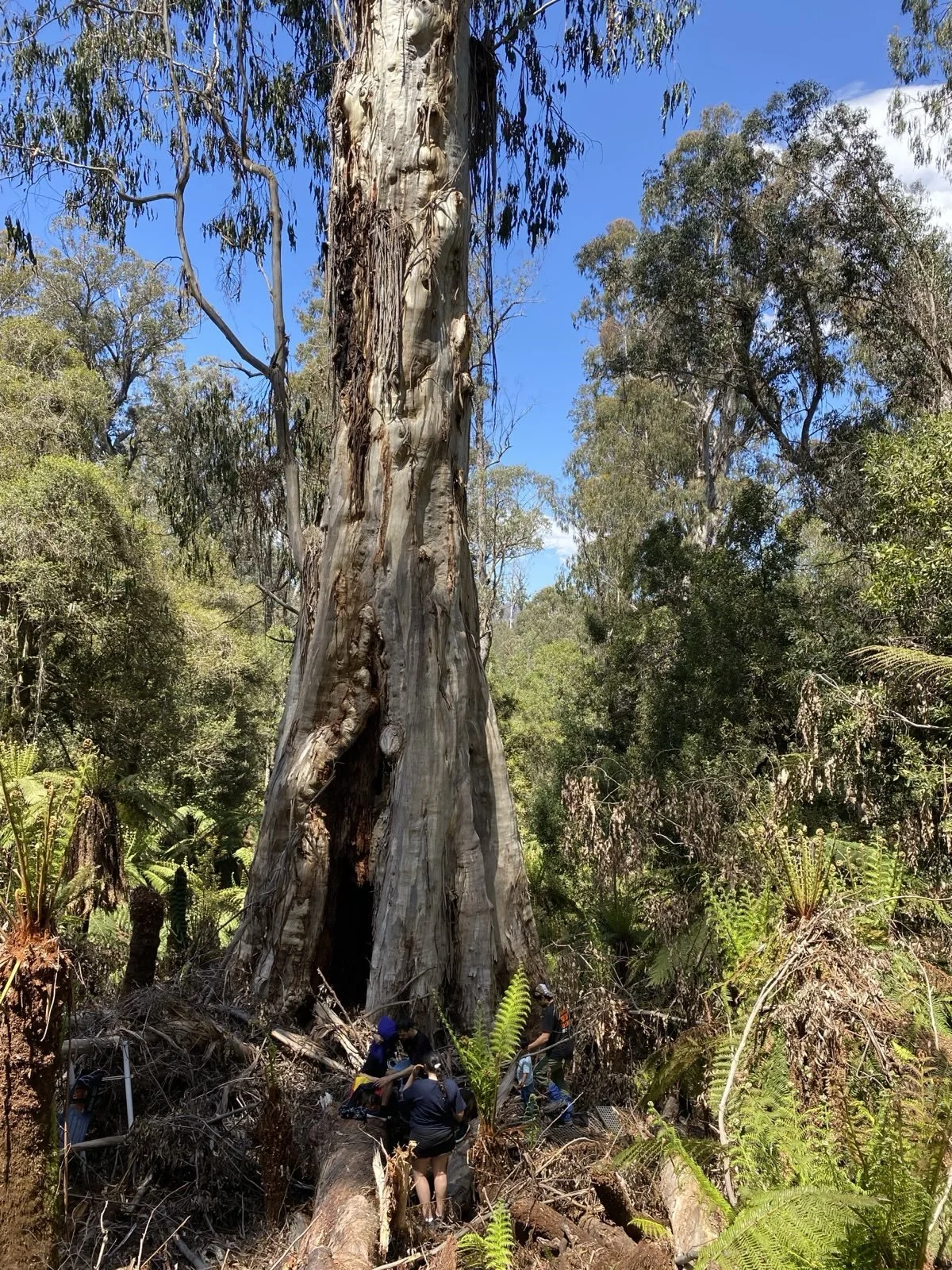
The Sea to Summit Forest Trail concept originally envisioned passing through iconic locations like Goolengook—an old-growth forest with rare rainforest species—and Kuark Forest, known for its towering trees and fern gullies. By incorporating existing roads and tracks, it proposed a variety of activities such as cycling, trail riding, and car touring to suit diverse visitor interests.
Although the feasibility study concluded that a continuous trail, as originally envisioned, is not currently viable due to the impacts of climate-fuelled 2019-20 bushfires, it produced the most comprehensive market research to date on East Gippsland’s potential for nature-based tourism. Crucially, it also identified new areas for further exploration and investment, including the high altitude forests of Errinundra, Glen Arte Reserve, and Five Tier Falls, all of which escaped the devastating effects of the flames. These areas present opportunities for strategic infrastructure and planning upgrades that could unlock significant visitation and conservation benefits for the forests and communities of the area.
Our advocacy efforts now focus on realising the promise highlighted by the feasibility study. Although a single, continuous Sea to Summit Trail may not be feasible today, the data clearly shows this region’s potential to attract visitors seeking immersive experiences in Australia’s unique natural heritage.
-
Between the commissioning and the on-ground assessment of the feasibility study, the 2019–20 summer bushfires dramatically altered much of the landscape. As a result, large areas south of Mount Ellery — already damaged by decades of clearfell logging — were further impacted, reducing their capacity to support a multi-day forest experience at the scale originally explored. The study concludes that the ecological continuity and landscape quality needed for such an experience are now strongest in the high country north of Mount Ellery.
It also highlights significant opportunity for continued investment in the Errinundra to Snowy district, where intact forests, cultural values and diverse habitats remain resilient. This region is identified as the area best suited to long-term conservation-led initiatives, including ecological restoration, cultural land management, and local employment pathways connected to a growing conservation economy. These findings provide clear direction for where future government investment can deliver the greatest benefit for both Country and communities.
You can access the feasibility study report here.
-
The feasibility study makes clear that the strongest opportunity for a world-class forest experience lies north of Mount Ellery, in the Errinundra to Snowy district. This region — shaped by ancient rainforest, cool-temperate gullies, subalpine forest and old-growth stands — offers the ecological integrity, cultural significance and landscape diversity needed to deliver a truly iconic nature-based experience.
Our next step is to advocate for renewed government investment in this district, as recommended in the study, so that trail development, visitor experiences and conservation economy opportunities can be designed where they have the greatest chance of success.
At the same time, we emphasise the need for greater First Nations stewardship across these forests. Cultural knowledge, leadership and aspirations for Country must guide how any investment is planned and delivered — ensuring that restoration, visitor access and local economic opportunities reflect the values and priorities of Traditional Owners.
The Errinundra Plateau and the surrounding high country represent some of Australia’s most precious and intact forest environments. Thoughtful investment, led collaboratively with First Nations partners and local communities, is essential to secure their future and build a conservation economy that restores landscapes while supporting regional communities.